
2026-10-03 · Tyler Bennett
How to Stop Condensation in Glenpool Metal Shops and Garages
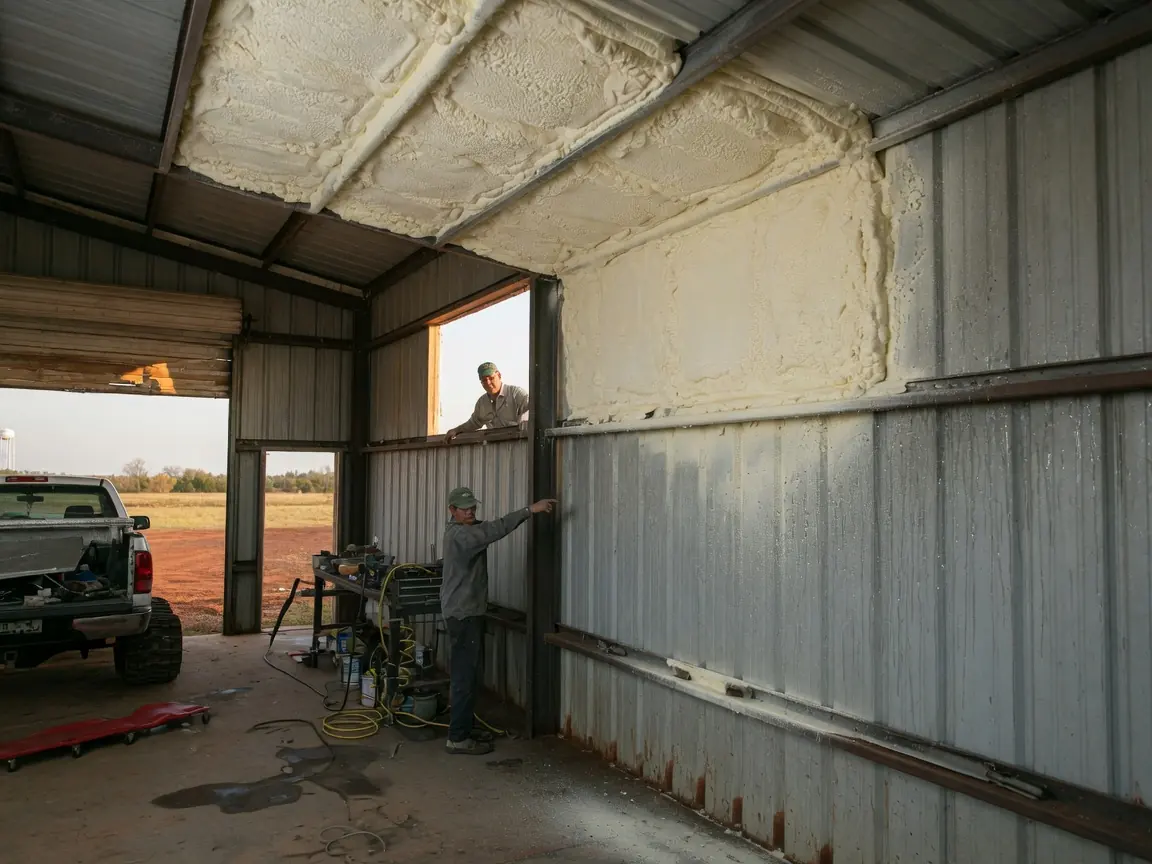
Condensation in Glenpool metal shops and garages stops when closed-cell spray foam is applied directly to the interior metal surfaces at a minimum 2-inch thickness. This creates an impermeable thermal and vapor barrier that keeps the steel temperature above the dew point even when outdoor humidity spikes in the humid subtropical climate of Tulsa County.
Why Condensation Develops on Metal in Glenpool
Metal buildings in Glenpool sit on flat terrain that traps moist air from the Arkansas River valley. During mild winters when temperatures hover in the 40s at night, the steel walls and roof panels cool rapidly while daytime humidity from nearby Jenks and Tulsa often exceeds 70 percent. Warm air inside the shop or garage contacts the cold metal, releasing moisture that drips onto tools, vehicles, and stored equipment. Older metal structures common along S Peoria Ave lack any interior liner, so the temperature differential hits the steel directly. This pattern repeats through spring and fall when rapid weather shifts are typical in the region.
How Closed-Cell Spray Foam Blocks Moisture at the Source
Closed-cell spray foam adheres directly to the metal panels and expands to fill every seam and fastener hole. Once cured, the material maintains an R-value of 6.5–7 per inch while forming a rigid layer that prevents air movement against the steel. In Glenpool garages and shops, this eliminates the cold surface that triggers condensation without requiring additional vapor retarders. The foam also adds structural rigidity to older buildings that experience wind-driven rain common in summer storms. Application occurs from the inside so business operations continue with minimal disruption.
For larger metal buildings, crews start at the roof deck and work downward to ensure complete coverage at the eave lines where most drip points occur. Metal Building Insulation follows the same process but scales equipment for taller clear spans found in commercial shops south of Glenpool Conference Center.
Practical Steps for Glenpool Shop and Garage Owners
Begin by inspecting for existing rust or standing water along the base angle and floor. Remove loose scale and allow the metal to dry before scheduling the foam application. Target coverage on the underside of the roof panels, all wall girts, and the overhead door frames. In spaces used for vehicle storage, apply an additional 1-inch layer around the door tracks to handle the frequent temperature swings when doors open to humid outside air. After installation, maintain indoor humidity below 55 percent with a basic dehumidifier during the hottest summer months when Gulf moisture reaches Tulsa County.
Owners in newer Glenpool neighborhoods often combine this work with Garage Spray Foam Insulation on the shared wall between the shop and living space to prevent moisture migration into finished areas.
Long-Term Performance in Local Conditions
Once installed, the foam layer maintains performance for the life of the building because it does not absorb water or compress under its own weight. Glenpool’s mild winters mean the material never faces freeze-thaw cycles that can affect other insulation types. Summer heat gains drop noticeably because the foam also reduces radiant heat transfer through the metal roof. Regular visual checks for any new penetrations, such as added vents or conduit, keep the barrier intact. Readers considering similar work on newer construction can review Spray Foam Insulation for New Construction in Glenpool: What Builders and Buyers Should Know for additional details on sequencing with other trades.